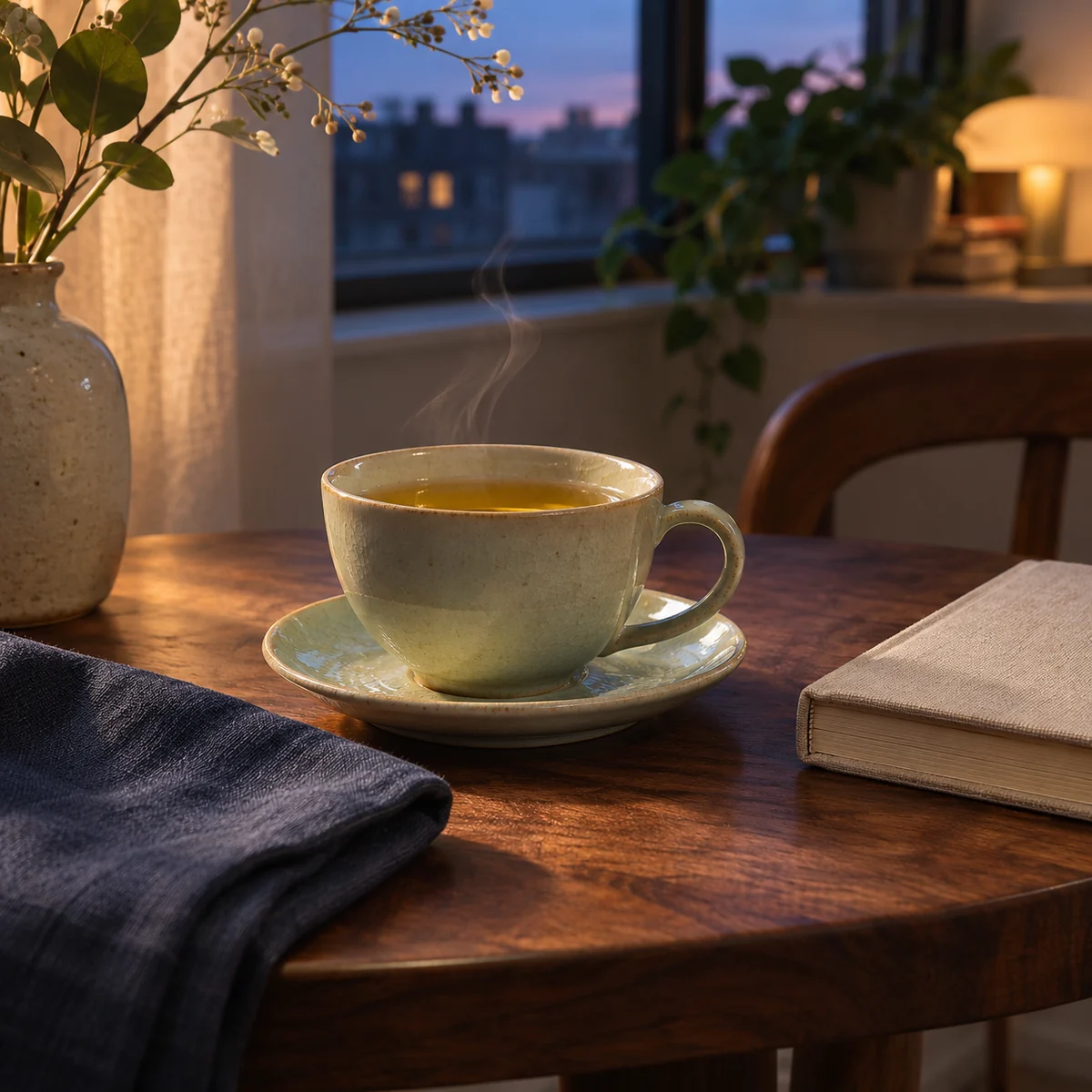
There’s a particular cup of tea that comes after the dishes are done. If yours is usually black tea, you can keep the mug, the splash of milk and the few minutes by the kettle, and change just the leaves.
That swap is the clearest way an evening tea can help with sleep: if caffeine keeps you awake, a caffeine-free cup leaves it out. Look at the ingredients of a blend, especially if it contains green or black tea. Even decaf tea can have a little caffeine left in it.1 As for whether a particular herb actually helps you fall asleep, the answer depends on what researchers measured.
Tasting notes / Floral
Chamomile, for the scent of apples
Lift a cup of plain chamomile to your nose before you sip. There’s a soft apple-like scent beneath the floral one; the pale gold tea tastes gentler than it smells. Try the first sip without honey. If you’d like a lighter cup next time, start at the shorter end of the steeping time on the packet.
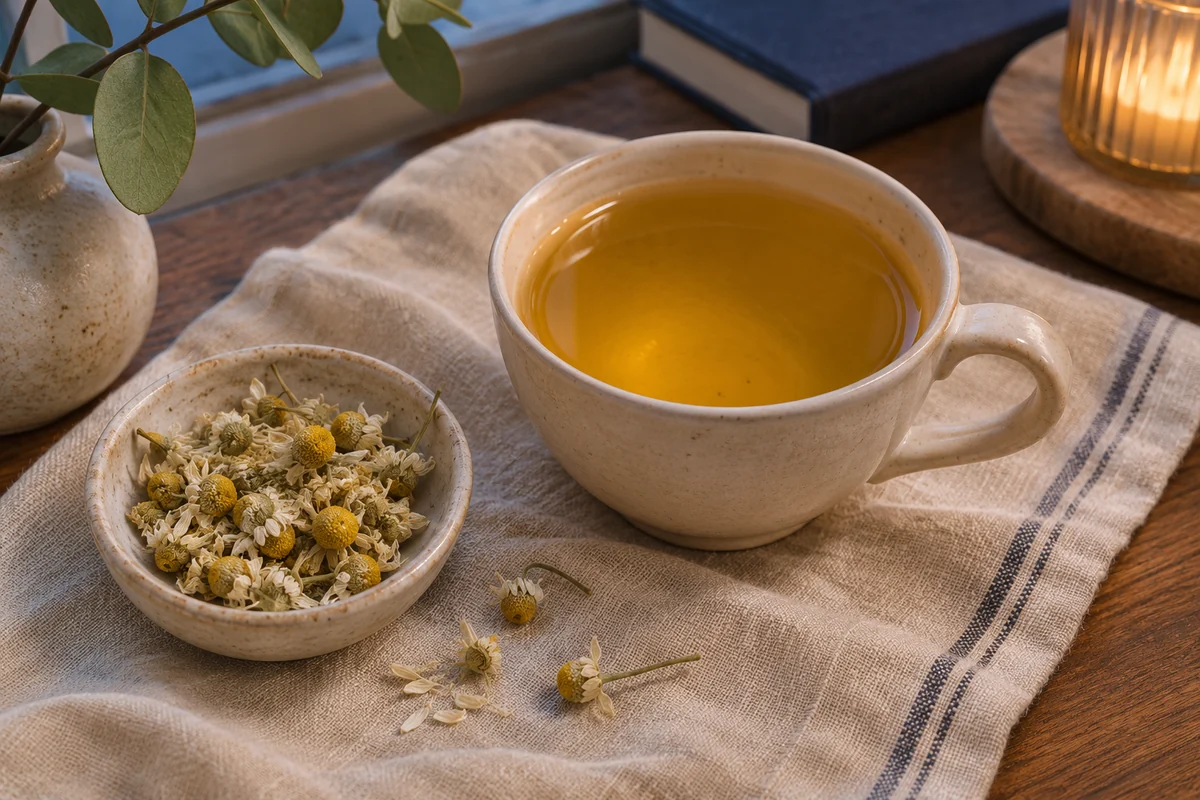
That familiar bedtime reputation is bigger than the evidence. In Taiwan, researchers studied 80 women who had recently given birth and were sleeping poorly. After two weeks, those who drank chamomile tea reported fewer sleep difficulties related to physical symptoms than those who received usual care alone. By the four-week check, the groups scored similarly. Whether chamomile helps most adults fall asleep sooner is still an open question.2
Before you pour: If you react to ragweed or daisies, chamomile can trigger an allergy too. If you take warfarin, check with a pharmacist or clinician before making it a regular drink.3
Tasting notes / Mellow
Red rooibos, if you take milk
Red rooibos looks almost like black tea in a deep mug. Pour a little into a clear glass and you’ll see the difference: it’s copper-red. Made from a South African shrub, plain rooibos is naturally caffeine-free and has a gentle sweetness of its own.4
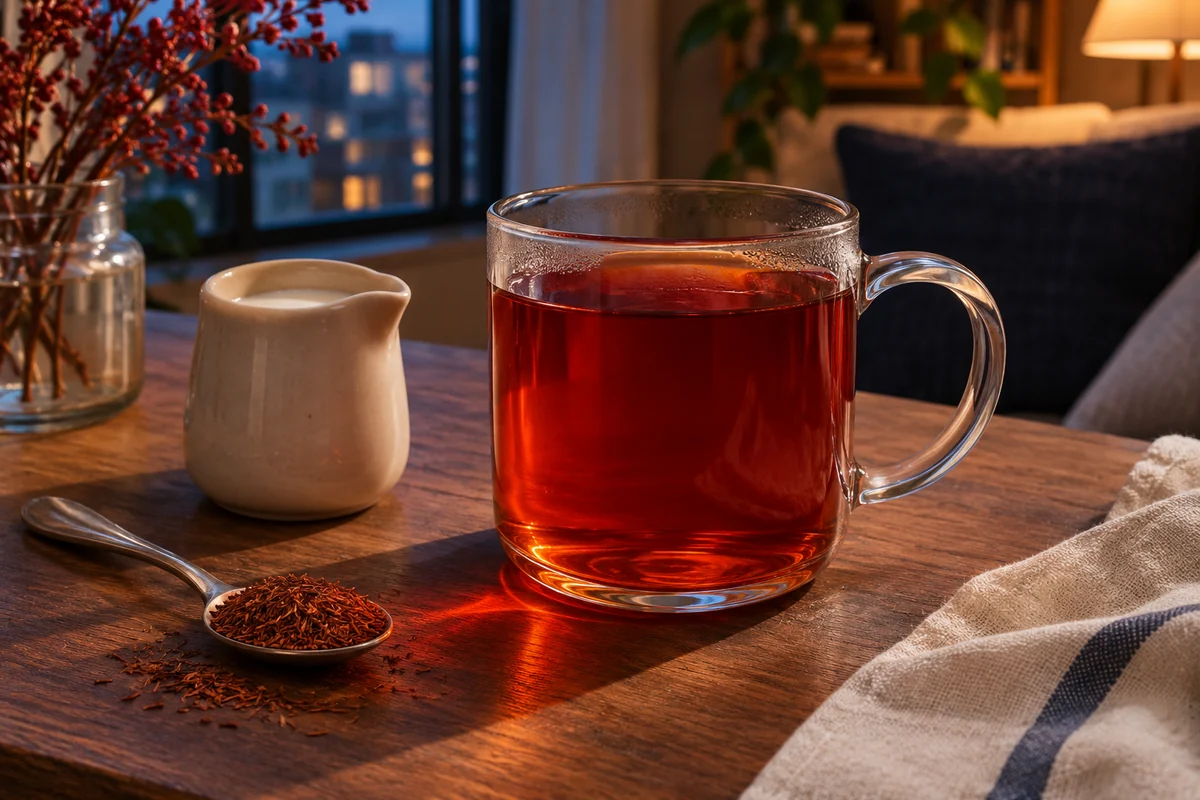
If chamomile reminds you too much of flowers, start here. Brew plain red rooibos according to the packet, take a sip, then add the milk you’d normally put in black tea. Its appeal at bedtime is straightforward: you get the rich colour and familiar milky cup without the evening caffeine. There’s no need to count on a sedative effect for that swap to be useful.
Tasting notes / Herbal
Passionflower, beyond the name
The name suggests a bright, tropical drink. A plain passionflower infusion is closer to a mild, grassy herb tea. If you’re curious about the tea used in sleep research, look for Passiflora incarnata on the ingredient list. A passion-fruit-flavoured black tea is a different drink entirely.
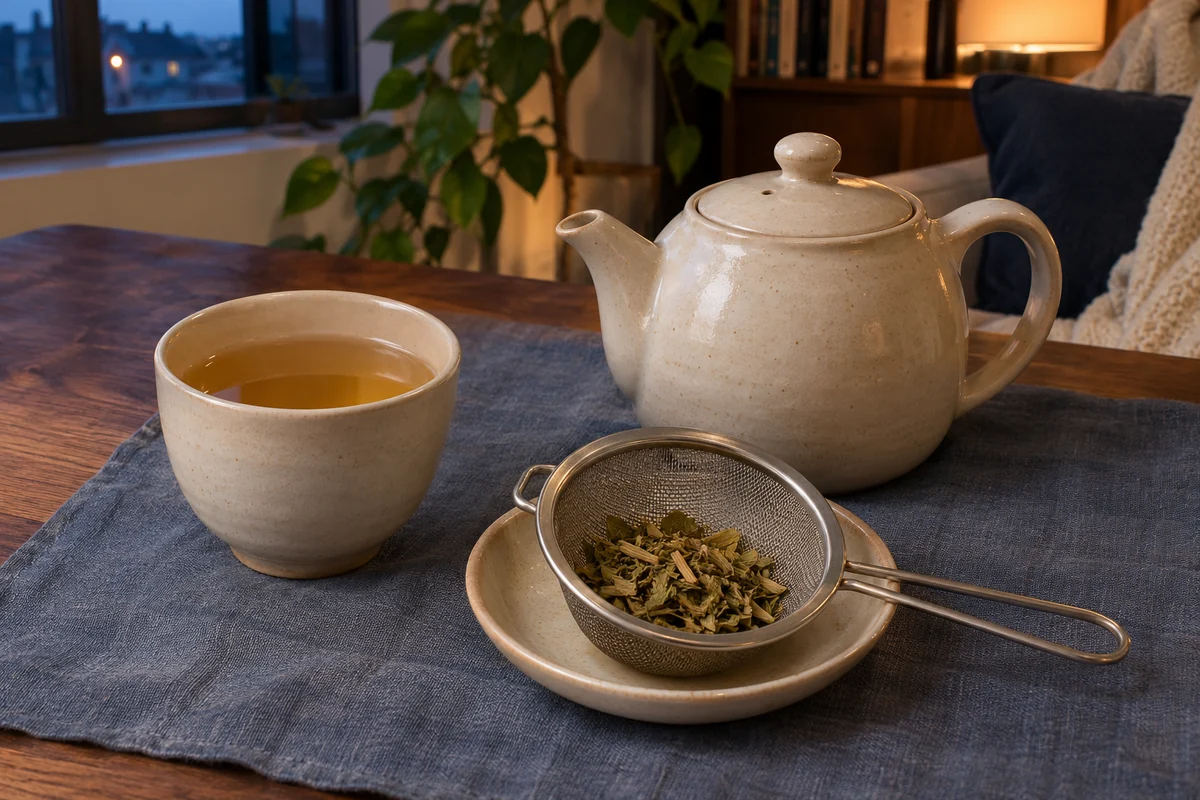
In a small trial, 41 adults aged 18 to 35 tried passionflower tea for one week and a comparison tea for another. Each morning they rated the previous night’s sleep. Of six sleep-diary measures, only their rating of how well they slept was significantly better with passionflower. Feeling you had a better night matters, but the trial didn’t show that people fell asleep faster.5
One to skip during pregnancy. Passionflower can cause drowsiness or dizziness and may interact with anesthesia. If you’re breastfeeding, take medicines that make you sleepy, or have surgery coming up, ask your healthcare team before trying it.6
A cup that fits your evening
For someone who misses milky black tea after dinner, red rooibos is a good place to start. For someone who lifts the lid of a teapot just to catch the scent, chamomile has more to offer. Use the mug you like, follow the brewing directions, and let the tea cool enough to taste. If a full mug sends you to the bathroom in the night, a smaller cup with dinner may suit you better.
If poor sleep keeps spilling into the next day, that’s worth discussing with a clinician.7 In the meantime, your evening cup can have a simpler job: being something you look forward to drinking.