Why the evening
A rough morning usually starts the night before.
Most rushed mornings aren’t really about the alarm. They’re about the small decisions waiting for you: where the keys are, whether your phone charged, what to wear, why the sink is still full.
An evening reset moves those decisions to the night before, when nothing is urgent. You don’t need new furniture or an app. You need a few fixed spots and the same short order every night. Here are the five steps, in the order that works best.
About 1 minute
Give your keys and wallet one landing spot.
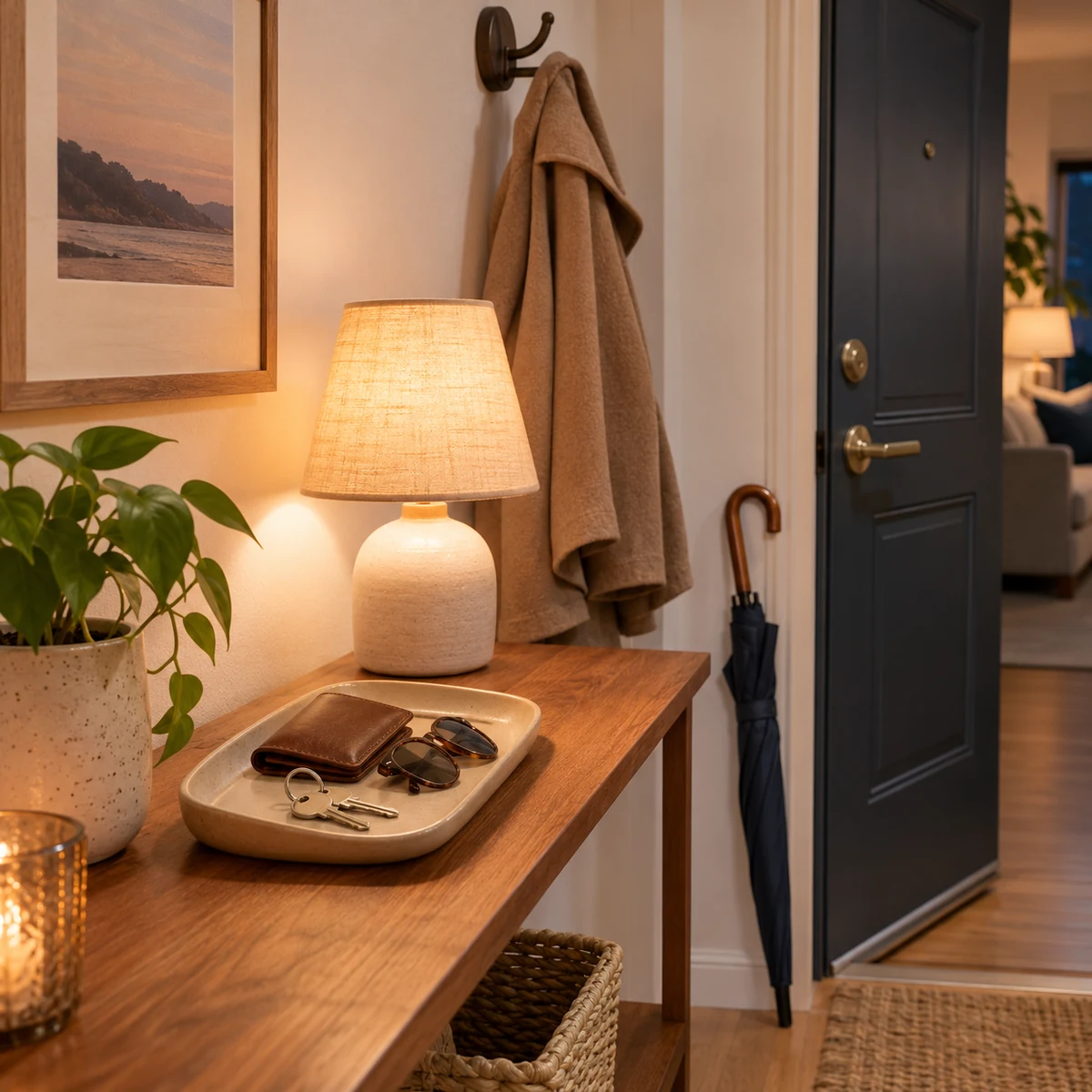
Pick one place by the door you walk past every time you come home: a small tray, a bowl or a hook. Keys, wallet, sunglasses, transit card and earbuds case go there the moment you walk in, and nowhere else.
The rule matters more than the tray. On most lost-key mornings, the keys are somewhere perfectly reasonable, just not the usual place. When everything has one home, you check one spot instead of five.
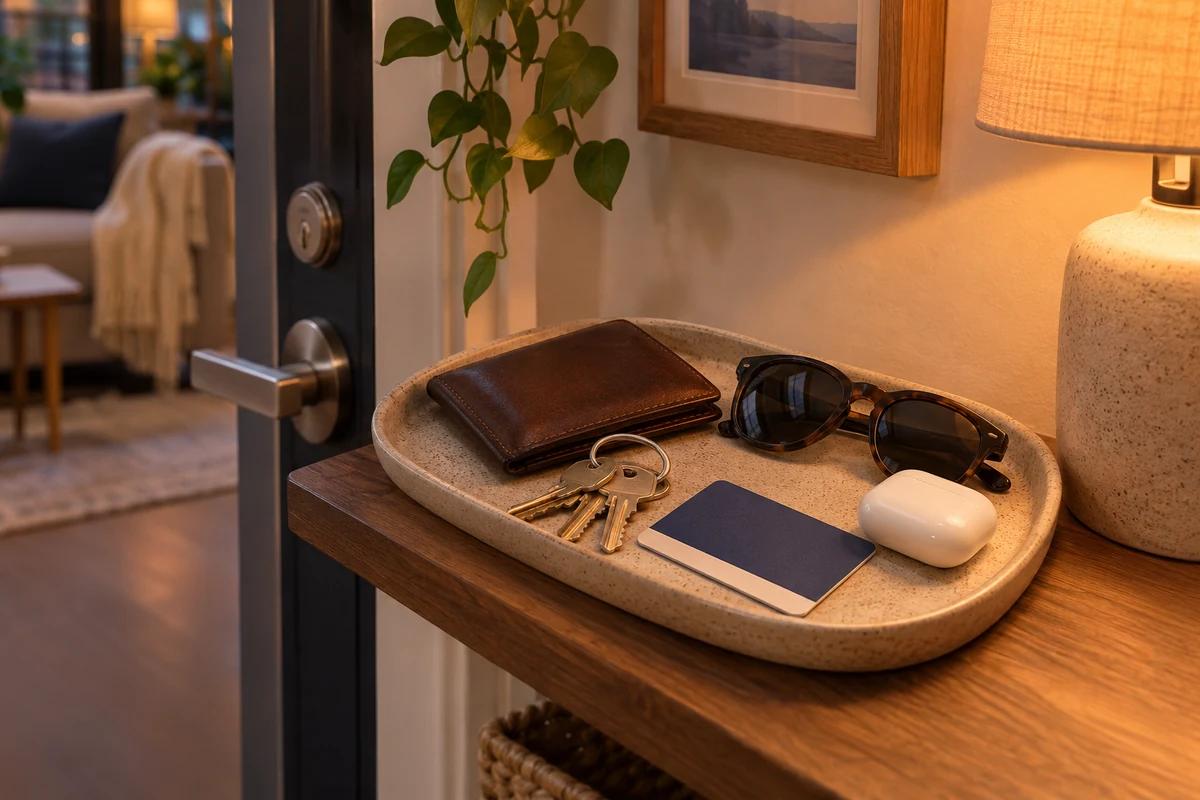
Sharing a home? Give each person their own section of the tray, or their own hook.
About 1 minute
Charge tonight, not at 7:45.
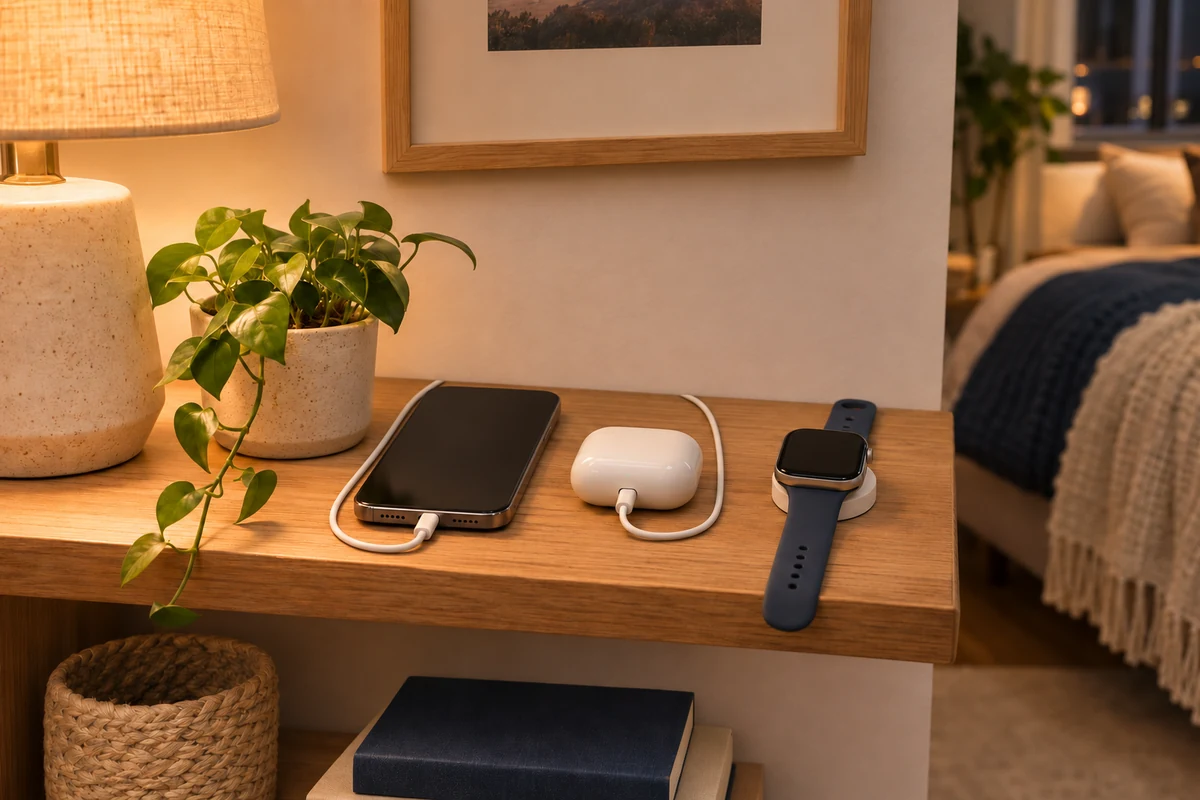
Set up one charging spot where the cables stay plugged in: phone, earbuds, watch and the power bank if you carry one. Plugging in then becomes part of coming home, not something you remember on your way out.
If your laptop goes to work with you, charge it this evening and put it straight back in the bag.
About 3 minutes
Lay out tomorrow.
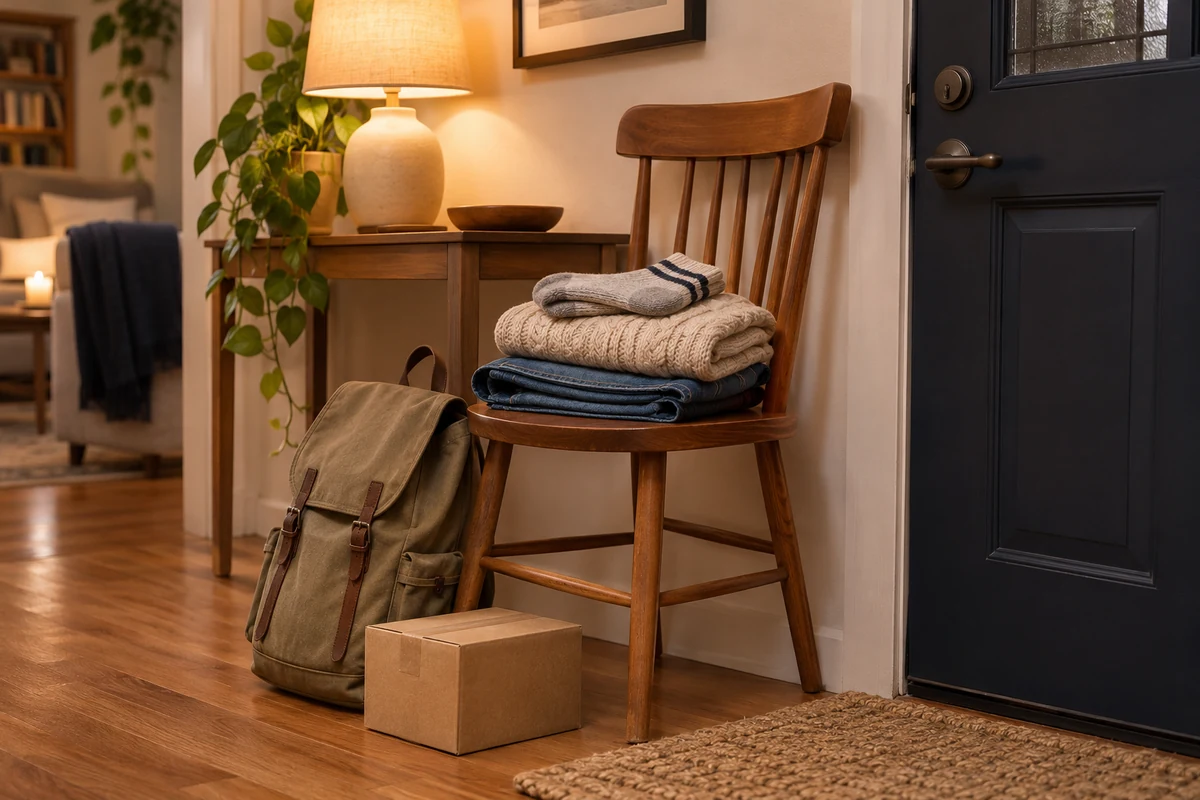
Check tomorrow’s weather, then put out what you’ll wear, down to the socks. Pack your bag and leave it by the door, next to your landing spot.
Anything that has to leave the house with you goes there too: a parcel to return, a form to sign, a library book. Lunch goes at the front of the fridge, where you’ll see it.
About 4 minutes
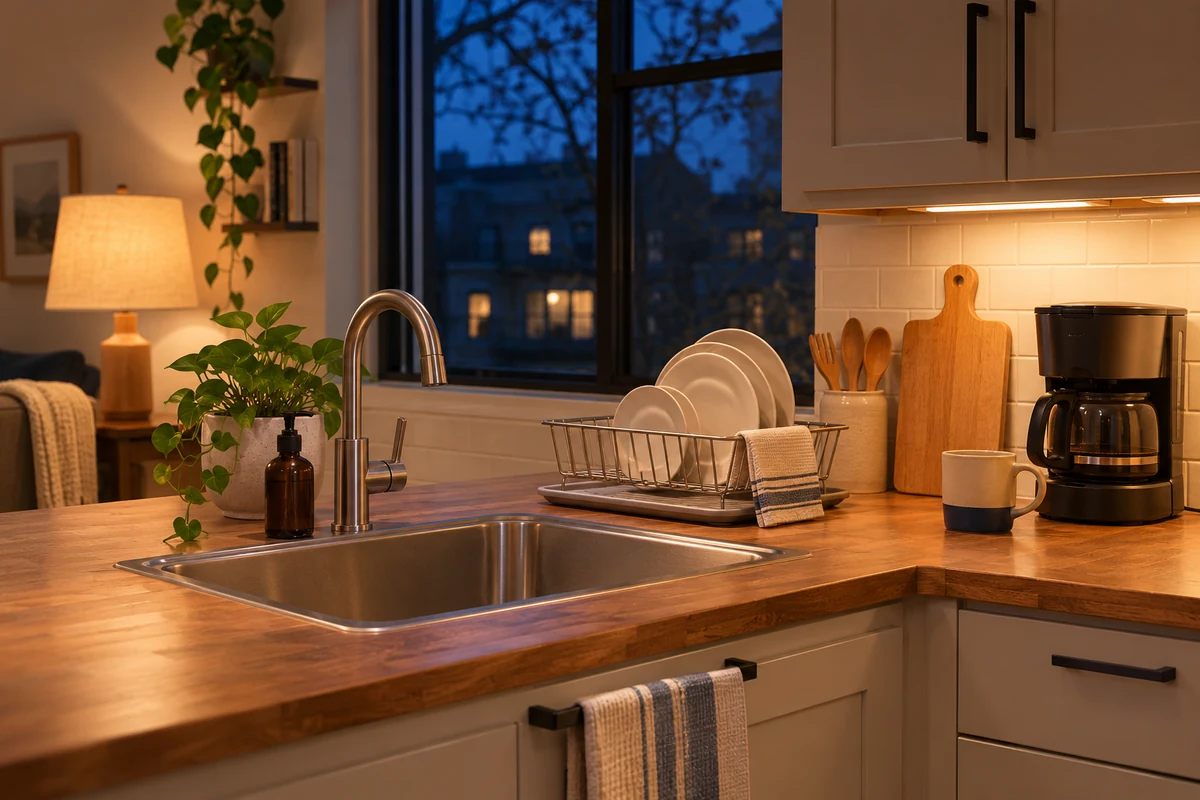
Give the kitchen four minutes.
Start the dishwasher, or wash and rack what’s in the sink. Wipe the counter you use most. If the trash is full, take it out now. And if you make coffee in the morning, set it up tonight: filter, grounds, water, mug.
You’re not cleaning the kitchen. You’re making sure the first thing you see tomorrow isn’t last night.
About 1 minute
Write three things for tomorrow.
On a small notepad next to your landing spot, write the three things that matter most tomorrow: a call to make, an appointment, the task you keep putting off. Three is enough. A short list you actually read beats a long one you don’t.
In the morning you pick up your keys and see the list at the same moment.

Save this list
Your 10-minute evening reset
Ticks are only on your screen and clear when you leave the page.
Making it stick
Four ways to keep it going.
Attach it to something you already do.
Do the reset right after something that already happens every night, like switching off the TV or brushing your teeth.
Keep the same order.
Door, charger, clothes, kitchen, list. After a while the order itself reminds you what comes next.
Start with one step.
Do the landing spot alone for a week, then add the charger. Small steps are easier to keep than a big plan.
Don’t restart from zero after a missed night.
Just pick it up the next evening. In a well-known study of how people form new daily habits, missing a single day did not noticeably set the process back.1
Questions
Common questions
I don’t have a table by the door. Where should the landing spot go?
Anywhere near the door you use most: a wall hook with a small shelf, a basket on the shoe rack, or the corner of a kitchen counter if that’s where you walk in. What matters is that it’s on your way in and on your way out.
Do I have to do all five every night?
No. Even one or two steps help. The landing spot and the charger take about two minutes together and cover the classic morning hunt for keys and a charged phone.
What if I live with other people?
Share the landing spot and the charging spot, and give each person their own section. Kids can lay out their own clothes and pack their own bags as part of the same routine.
How long until it feels automatic?
It varies a lot from person to person. In one study that followed people building a new daily habit, the time until it felt automatic ranged from 18 to 254 days, with a median of 66 days.1 Ten minutes a night is small enough to keep going while it settles in.
Start tonight
Pick one step and do it tonight.
Clear a spot by the door and put your keys there when you get home. Tomorrow morning, notice that you didn’t have to look for them. Then add the next step.